Australia's peak industry body for Sports Turf Management
Australia's peak industry body for Sports Turf Management
The Australian Sports Turf Managers Association is seeking member feedback and input into the development of Guidelines for Wildlife Management Methods at Sports Turf Facilities.
The Association has been working with various State governments over the past 18 months, and has been asked to join a selected group of organisations to provide input into a national approach on developing Guidelines for Wildlife Management Methods at Sports Turf Facilities.
|
In conjunction with the Department of Agriculture, Water and the Environment, and State/Territory Departments of Environment, Land, Water and Planning, the project aims to develop effective management methods to assist in reducing damage to turf playing surfaces from wildlife including Corellas, Cockatoos and Galahs. The area of focus for this national program is to understand current control methods of dealing with wildlife, options available to turf managers and the community to manage wildlife damage and develop recommendations as to a seasonal course of action to reduce Corella, Cockatoo and Galah issues on the turf at sport and recreation facilities. BackgroundBirdlife, (primarily Long-Billed Corella, Sulpher-Crested Cockatoos and Galahs) have created challenges for sports turf managers over many years, and the severity of the problem has resulted in tens of thousands of dollars damage and hours of remedial action required by turf managers to repair greens, wicket blocks and other turf infrastructure. On average, the volume of birdlife impacting facilities, whilst fluctuating between states and migratory patterns over the past decade, has increased significantly and the issue to manage and control wildlife remains of significant concern to facilities. A number of management and control methods have been adopted by turf managers in the past, and the Australian Sports Turf Managers Association is seeking member input to understand these methods, impacts and outcomes, in order to provide detailed feedback into the development of national Guidelines for Wildlife Management Methods at Sports Turf Facilities. |
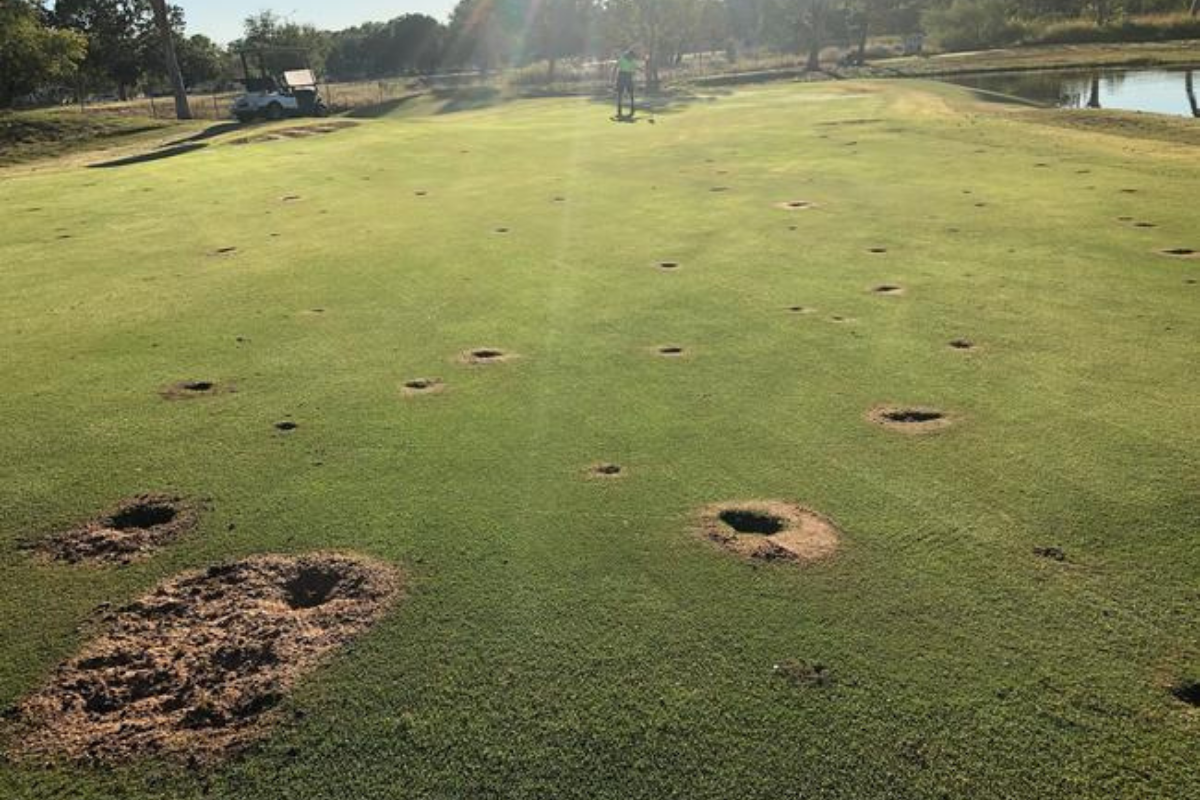
Katherine Golf Club, Northern Territory |
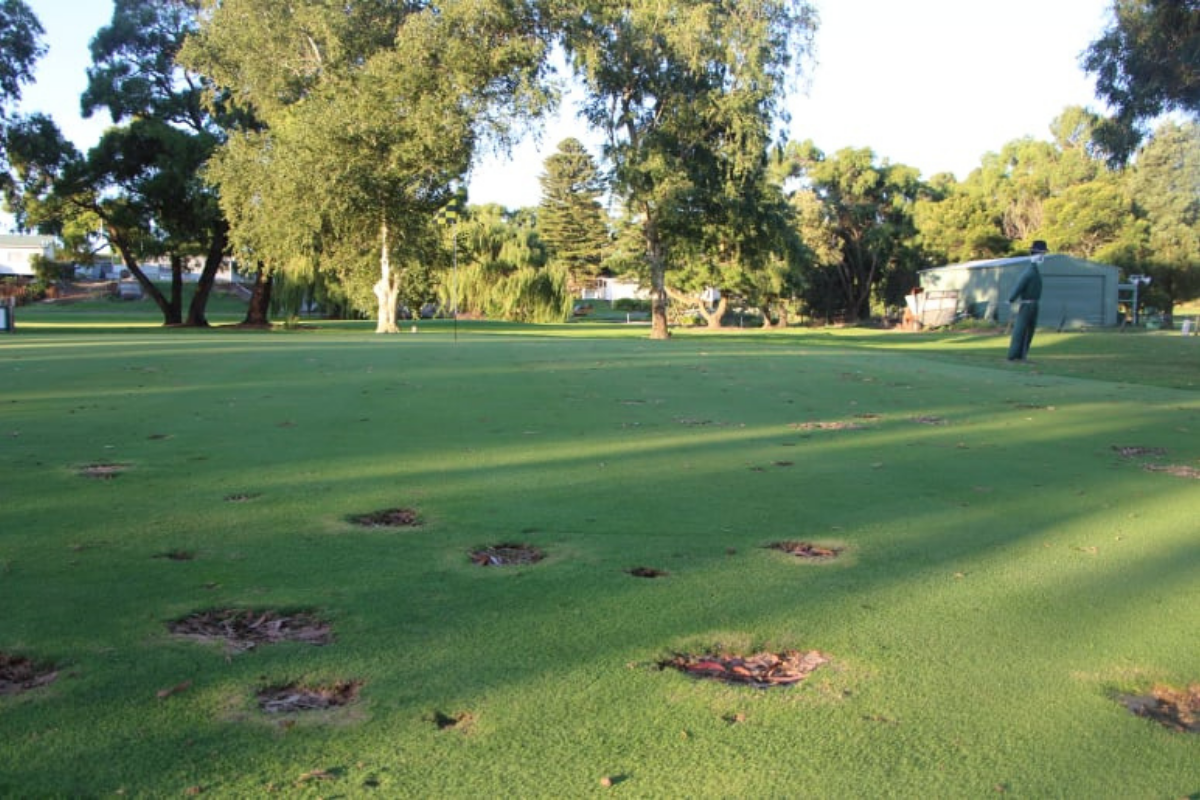
Increasingly common, large flocks of birdlife (Corellas, Cockatoos and Galahs) in urban and rural areas cause considerable problems in the warmer months, with the most commonly reported issues to facilities being damage to greens, tees and wicket areas and damage to trees (defoliation). These birds can also damage buildings, damage flashing or wiring, tarpaulins, turf nurseries, structures, cars and a variety of localised issues.
There is significant public contention regarding the management of little corellas, and existing management and control options can be difficult, expensive or effective for short timeframe only. Many facilities have a history of problems with Corellas and other birdlife, and have invested significant resources into developing strategies for their management.
Experience and knowledge of corellas exists within the industry and turf managers, and within the individual agencies forming part of the national project group, though little information sharing or coordination of activities occurs at a State or National level.
|
The Australian Sports Turf Managers Association is seeking feedback from members, and input into the development of Guidelines for Wildlife Management Methods at Sports Turf Facilities.
The project will be looking to investigate additional factors, including:
|
Terang Golf Club, Victoria |
Further, we are also seeking opportunities for further input, research or trials that members would like to see undertaken to address the situation and minimise the issues and/or damage to facilities caused by this birdlife.
The Association is encouraging all members who have/are experiencing bird damage to facilities to provide feedback into the Program, as the more feedback that the Association is able to receive from turf managers, the more compelling our case if for support and assistance and the more comprehensive and targeted the resulting Guidelines for Wildlife Management Methods at Sports Turf Facilities that will be developed.
Members and facilities are encouraged to provide their input and feedback (below) into the Program by Friday 8th April, 2022 via the form below.