
Australia's peak industry body for Sports Turf Management
Australia's peak industry body for Sports Turf Management
The NSWGCSA hosted its first meeting of 2025 last Monday with a ‘walk and talk’ around one of the country’s most iconic courses – New South Wales Golf Club. Ahead of the world top 50 course reopening for members Saturday after six months of major works, more than 90 NSWGCSA members got a sneak preview of the club’s new-look greens and bunkers, with host superintendent Mark Parker providing a wonderful insight into the recent project.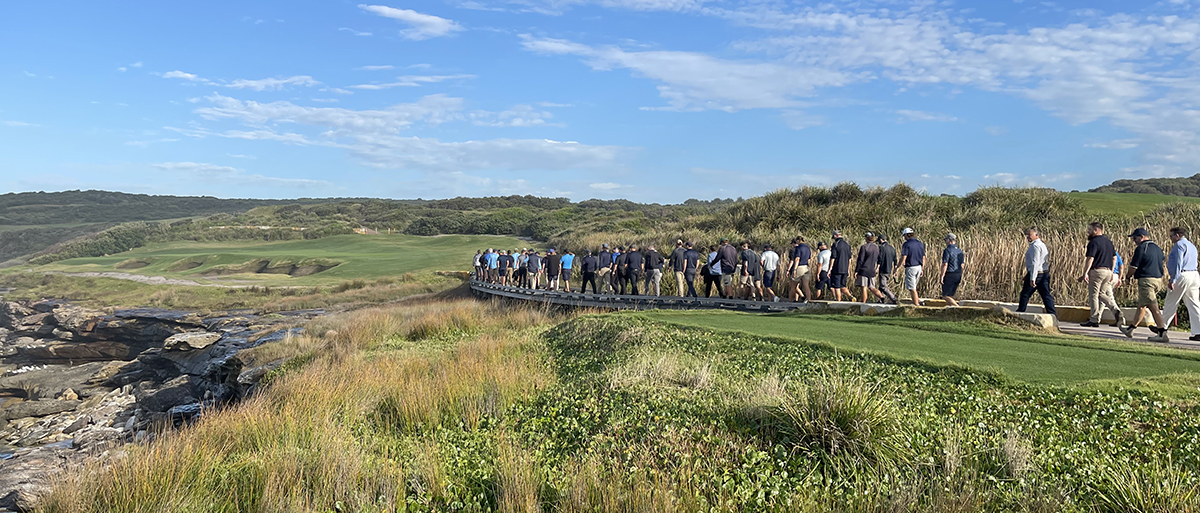
It was last September when the La Perouse course closed its doors to members and began a major process to reconstruct all greens complexes from the base up under the auspices of UK-based course architecture firm Mackenzie & Ebert. Although having a long list of high end UK and European courses on their books, including a number of Open Championship rota courses such as Turnberry, Royal Portrush, Royal Dornoch and Royal St Georges, it was the company’s first engagement in Australia.
Mackenzie & Ebert were appointed in late 2022 following the club’s short-lived association with Tom Doak. The club had initially engaged Doak to come up with a masterplan and also undertake the redesign of the famous par three 6th green which had been necessitated due to construction of a new coastal walkway. Based on the results of that green, constructed in late 2018, and the masterplan, the club decided to part ways with Doak and eventually settled on Mackenzie & Ebert, with director Tom Mackenzie becoming the lead architect for the eventual greens project.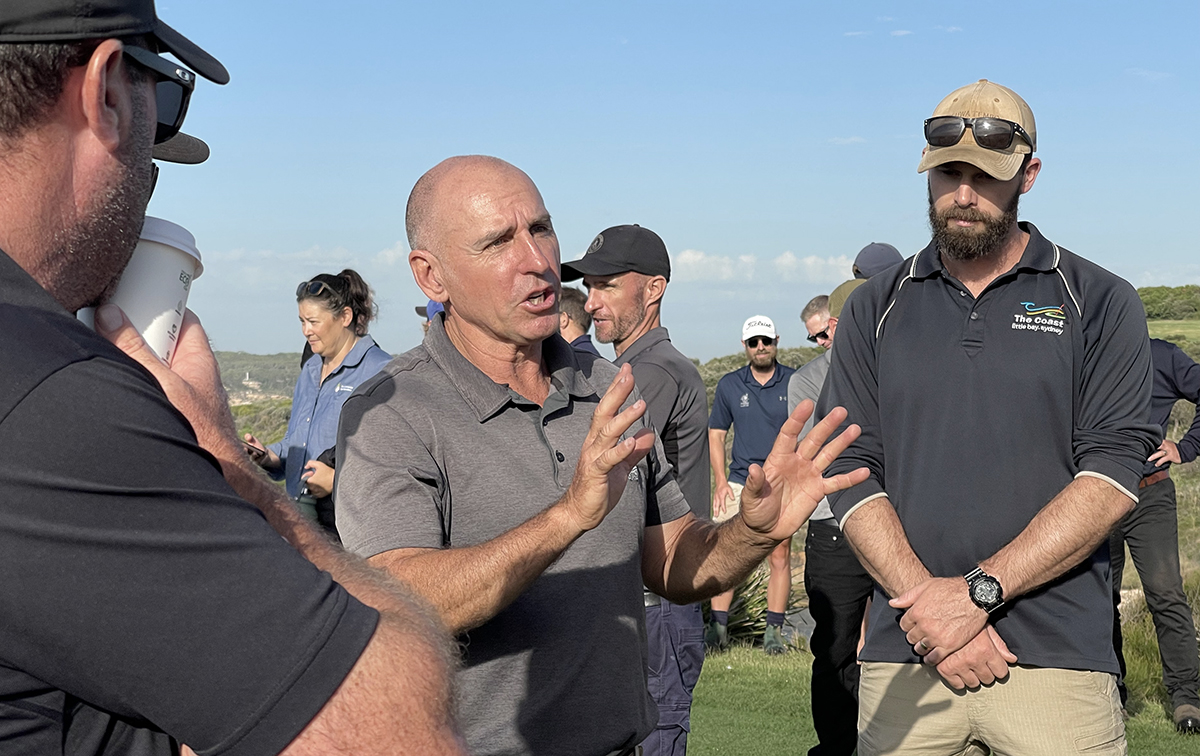
After a number of iterations, a final design was decided upon with works beginning at the start of last spring. Under the guidance of Parker, who just eight years ago had undertaken a similar project at Concord Golf Club, all greens were completed by Christmas with the last two months spent growing them in ahead of the 1 March re-opening. All construction work was completed in-house using a team of three shapers who worked on two greens at a time. Once six greens were bulked in, Mackenzie would come out for a 10-day stint and make any necessary changes prior to the gravel, sand and turf being installed.
After trialling a number of new bentgrass varieties on site to determine their suitability, 777 bentgrass was ultimately chosen. It has replaced the previous MacKenzie bentgrass which Parker’s predecessor Gary Dempsey had installed when the club replaced the old Poa annua greens in 2011/2012. Due to the site’s coastal location and impact of its notorious winds, all greens were solid turfed. As he had done with his previous work at Concord, Parker reconnected with StrathAyr who grew the 777 and transported it up from Tasmania in refrigerated containers.
The new greens have been constructed with a USGA-spec gravel and variable depth sand rootzone. Where there are lower points in the greens a greater depth of sand has been added to assist with drainage, while the higher ridges and peaks have a lesser depth of sand so as not to drain as quickly. Unable to source a consistent 80/20 mix which had been used during the previous greens reconstruction, Parker opted to use a sand from Terara near Nowra, NSW. Parker had seen its use at neighbouring St Michaels Golf Club when they did their greens, with superintendent Lee Sutherland raving about its qualities. Shane George, now assistant at The Australian, had also used the sand when he was superintendent at Shellharbour. 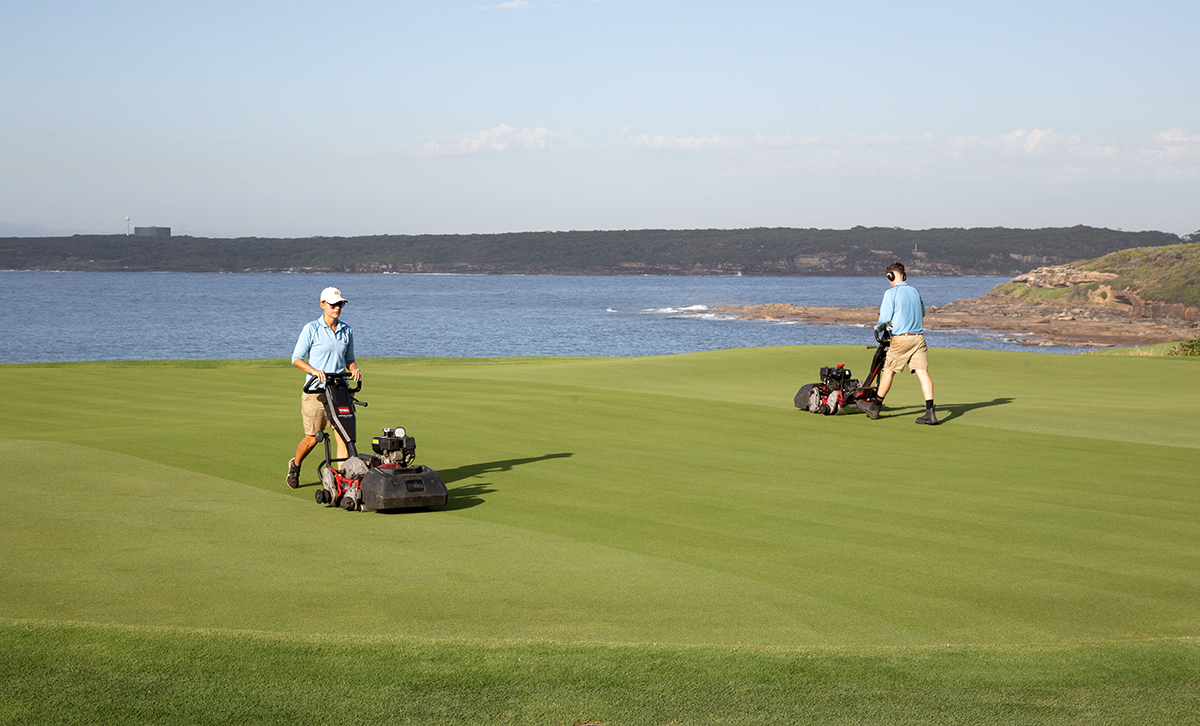
In terms of the overall strategy of the course, green size has increased from one hectare to 1.5 hectares. The most significant changes have come with the 6th green which has effectively doubled in size and now measures 1002 square metres. Other key changes include a new front right section on the 5th green behind the greenside bunker, as well as a narrow 8m-wide entry into the 3rd green which is now guarded by a deep revetted bunker that wraps around the front right hand side. The 16th green and 19th greens have also been joined together to create a large double green.
Outside of the greens and bunker works, another major new feature is the addition of a near-300 metre long sandstone wall (pictured below) that separates the practice fairway from the 18th fairway. The sandstone mimics that which is prevalent around Sydney and over time the plan is to get lichen to grow over it to give it a more aged look.
“New South Wales has always been a brilliant course – you don’t get inside the world top 50 if you’re not special, and this place is,” says Parker “However, one thing that it lacked when compared to the other great golf courses around the world were the greens. The two dimensional shapes were very rounded and there wasn’t a lot of variety in terms of pin placements and shots. What Tom has done is create a lot more interest in the greens complexes, more pin locations and more movement which ties in better with the wonderful landscape we have here.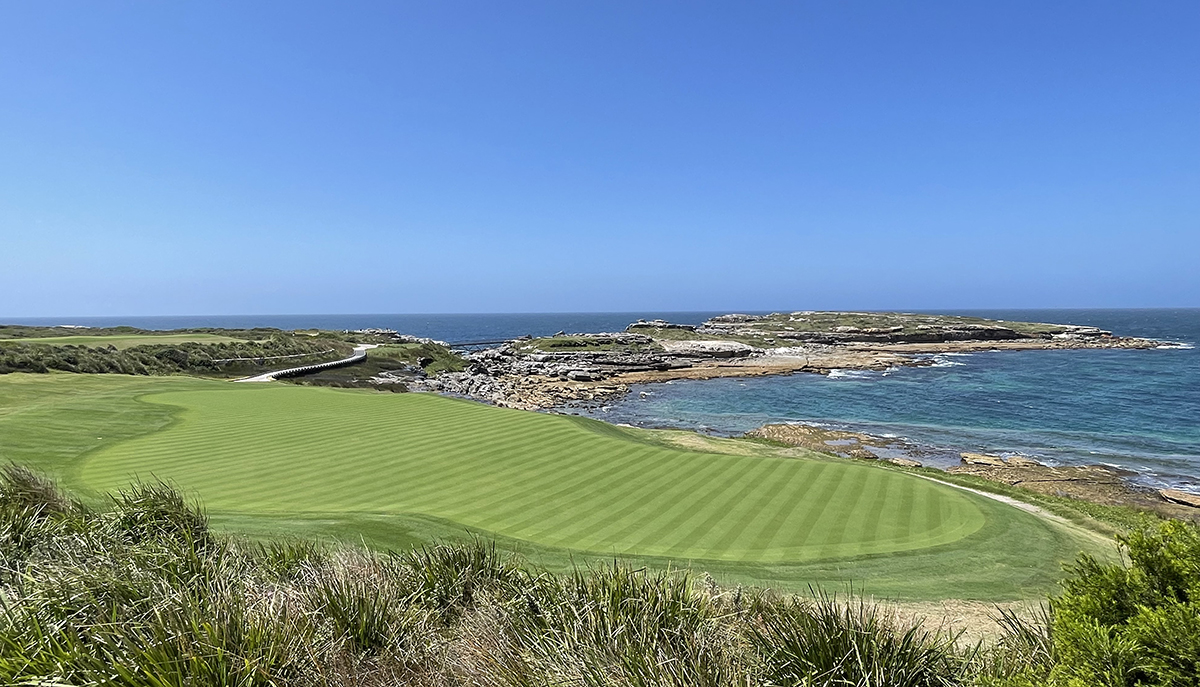
“I can’t speak highly enough of Tom, not only for what he has produced but just how good he was to work with. He was willing to listen and make changes along the way and I think the result we have ended up with has been all the better for that. He helped us to lay turf as well and even his wife Amanda helped out at one point. We also had the board of directors in at one point laying turf! It was that sort of project. It was a real community effort and I cannot thank enough all the people that have helped out along the way. The support from my NSW superintendent and industry colleagues has been amazing and has helped us to achieve a fantastic result.”
The full story of the NSW Golf Club greens project will feature in an upcoming edition of Australian Turfgrass Management Journal. The ASTMA congratulates Mark, a life member of the NSWGCSA association, and his crew on their efforts across the duration of this significant project in the club’s history.